
Ethereum Betting Smart Contract Exploits: What Has Gone Wrong and Why
 Available in US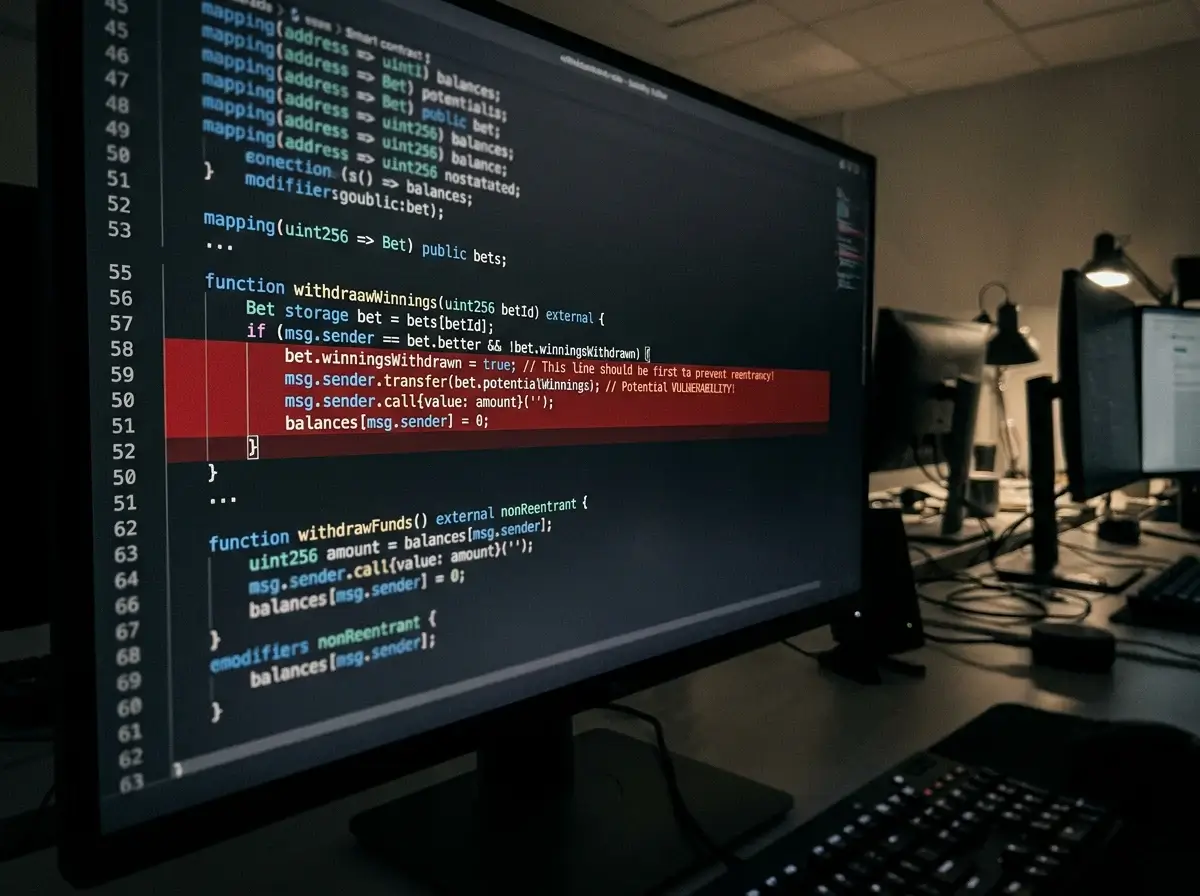
Smart Contracts Are Trustless – Not Flawless
The first time someone told me a betting platform was “trustless because it runs on smart contracts,” I nodded along. Then I watched a DeFi protocol lose $120 million overnight because its smart contract had a reentrancy bug that a 22-year-old exploiter found in an afternoon. Trustless does not mean safe. It means the rules are enforced by code – and if the code has a flaw, the rules enforce the flaw just as impartially.
About 77% of crypto casinos now offer provably fair games built on smart contracts. Tim Miller at the UK Gambling Commission has spoken about supporting innovation as a central consumer protection tool against the illegal market. Both of these facts are encouraging – more transparency, more regulatory engagement. But they coexist with a reality that the betting industry often downplays: smart contracts are software, software has bugs, and bugs in financial contracts get exploited for profit.
This article is not about scaring anyone away from on-chain betting. It is about understanding the specific failure modes that have occurred so you can evaluate the risks with open eyes. The crypto gambling industry processes over $81 billion in annual revenue. Some portion of that flows through contracts that have never been audited. Knowing what to look for matters.
Common Exploit Categories in Betting Contracts
Three exploit categories have caused the most damage to betting and gambling platforms on Ethereum. They differ in technical mechanism but share a common thread: they exploit the gap between what the contract developer intended and what the code actually permits.
Reentrancy attacks occur when a contract makes an external call – typically sending ETH to a user – before updating its internal state. An attacker’s contract receives the ETH and immediately calls back into the original contract, which still thinks the withdrawal has not happened. The loop repeats, draining funds. This is the oldest and most well-known smart contract vulnerability, dating back to the DAO hack in 2016, but variants still appear in newer contracts that implement withdrawal functions carelessly.
Oracle manipulation targets contracts that rely on external data feeds – price oracles, random number generators, or sports result feeds. A betting contract that pulls odds or results from a single oracle source is vulnerable to anyone who can temporarily distort that source. Flash loan attacks are the most common vector: an attacker borrows a large sum, manipulates the oracle’s reference price through a series of trades, triggers the betting contract to settle at the distorted price, and repays the loan – all in a single transaction. The contract behaves exactly as coded; the oracle input was corrupted.
Logic errors are the broadest and most varied category. These are bugs in the contract’s business logic – incorrect payout calculations, edge cases where multiple bets can claim the same pot, or conditions where a user can withdraw more than their balance. Unlike reentrancy and oracle manipulation, logic errors do not follow a predictable pattern. They are unique to each contract’s design and are caught through thorough auditing and testing, not by applying known defensive patterns.
Documented Attacks on Crypto Betting Platforms
I want to be specific here without providing a how-to. The purpose is pattern recognition, not instruction.
Several decentralised prediction markets have suffered oracle manipulation exploits where the resolution source was compromised or gamed. The attacker did not hack the smart contract itself – the code executed exactly as written. Instead, they manipulated the input the contract relied on, causing it to settle markets incorrectly. The platforms that survived these attacks did so by implementing multi-oracle resolution requiring consensus from multiple independent data sources before settling a bet.
On-chain casino contracts have been hit by random number generation exploits. Early implementations used block hash or timestamp as a randomness source, which miners or validators could influence. A validator who also plays on the casino can preview the “random” outcome before it is revealed and place bets accordingly. Chainlink VRF (Verifiable Random Function) was developed specifically to solve this problem, providing randomness that is provably unbiased and unpredictable by any party, including the oracle operator.
Flash loan attacks against gambling protocols have targeted those using automated market makers for odds pricing. By manipulating the AMM’s reserves with a large temporary position, the attacker shifts the odds in their favour for a single block, places a bet at the distorted odds, and lets the AMM rebalance after the loan is repaid. The betting contract, trusting the AMM as its odds source, pays out at inflated odds for what was effectively a risk-free trade.
The common thread is dependency on external inputs. Betting contracts that are fully self-contained – with all game logic and randomness generated on-chain through audited mechanisms – have proven more resilient than those that rely on external data feeds, price oracles, or third-party services.
How Contract Audits and Bug Bounties Reduce Risk
An audit is a systematic review of a smart contract’s code by an independent security firm. The auditor looks for known vulnerability patterns, tests edge cases, and evaluates the contract’s logic against its stated design. Major audit firms – Trail of Bits, OpenZeppelin, Consensys Diligence – publish their findings, giving users visibility into what was checked and what was found.
An audit is not a guarantee. It is a snapshot of the contract’s security at a specific point in time, conducted by a team with finite time and resources. Audits miss things. Contracts are sometimes modified after an audit, introducing new vulnerabilities. And some “audits” are conducted by firms with no track record, producing reports that look professional but lack rigour.
When evaluating a betting platform’s audit, look for three things. First, the audit firm’s reputation – have they audited major DeFi protocols that have operated without exploit for years? Second, the scope – did the audit cover the entire contract or only specific functions? Third, the findings and responses – did the platform fix all identified issues, and were any flagged as “acknowledged but not resolved”? That last category is where residual risk lives.
Bug bounty programmes complement audits by offering financial rewards to independent researchers who discover vulnerabilities. A well-funded bounty – $50,000 or more for critical findings – attracts skilled security researchers who may find issues that formal auditors missed. Platforms that run ongoing bounties signal a commitment to security that extends beyond a one-time checkbox. For a broader perspective on the security considerations every bettor should evaluate, the provably fair mechanics guide covers how legitimate platforms implement verifiable fairness.
What should I look for in a smart contract audit report?
Check three things: the reputation of the audit firm, the scope of what was audited, and whether all identified issues were resolved. Reputable firms include Trail of Bits, OpenZeppelin, and Consensys Diligence. A thorough audit covers the entire contract, not just selected functions. If the report lists issues as ‘acknowledged but not resolved,’ those represent residual risk.
What is a reentrancy attack in the context of ETH betting?
A reentrancy attack exploits a smart contract that sends ETH to a user before updating its internal balance records. The attacker’s contract receives the payment and immediately calls back into the betting contract to withdraw again, repeating the loop until funds are drained. Modern contracts prevent this by updating balances before making external calls, but older or poorly coded contracts remain vulnerable.
Are centralised ETH sportsbooks safer from smart contract exploits than decentralised ones?
Centralised sportsbooks hold user funds in traditional databases, not in smart contracts, so they are not vulnerable to on-chain exploits like reentrancy or oracle manipulation. However, they introduce different risks: platform insolvency, internal fraud, and custodial loss. Decentralised platforms are exposed to smart contract risk but remove the need to trust a central operator. The risk profiles are different rather than strictly better or worse.