
Best Ethereum Wallet for Sports Betting: Security vs Convenience
 Available in AU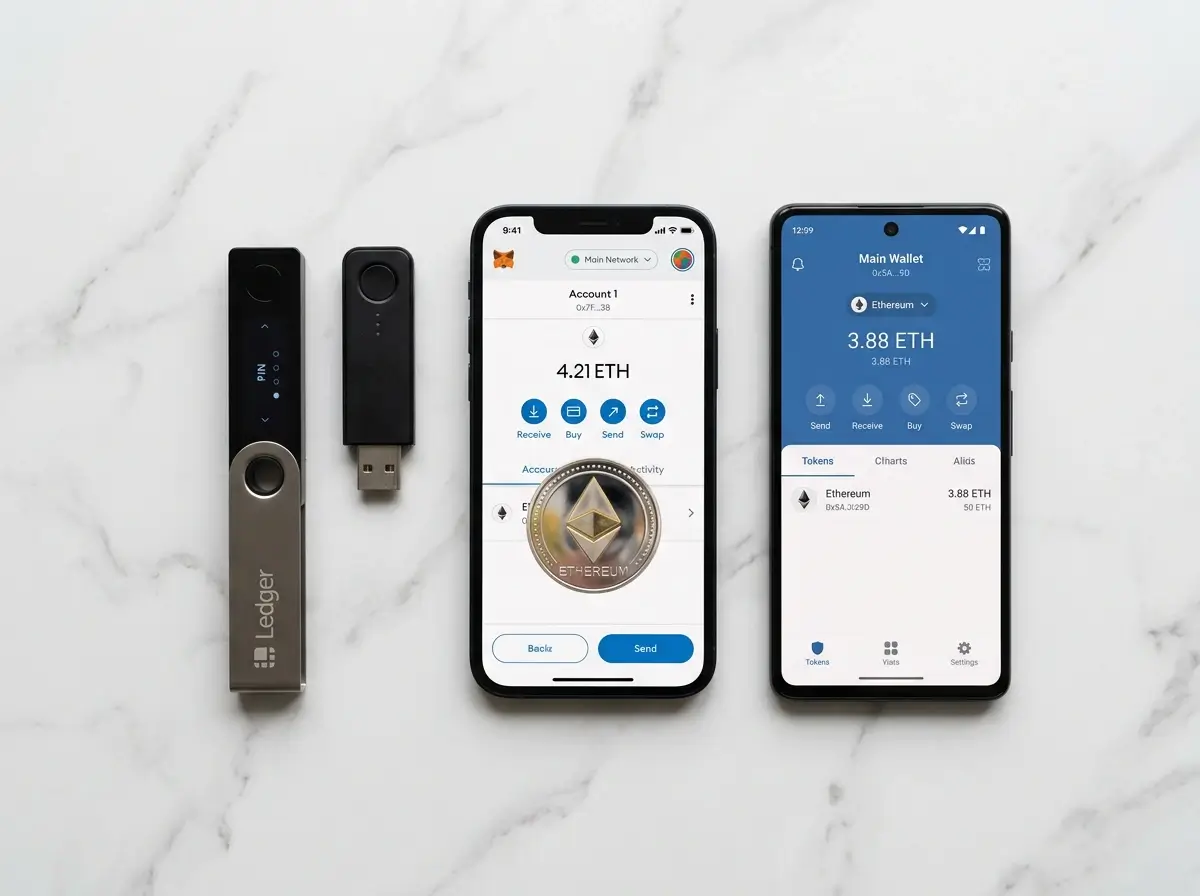
Your Wallet Choice Shapes Your Entire Betting Experience
I used to think a wallet was just a wallet – a place to hold ETH before moving it somewhere else. Then I spent a weekend trying to place a live bet using a Ledger hardware wallet, watching the odds shift three times while I fumbled with USB connections and on-device confirmations. That experience taught me that the wallet you choose is not a neutral decision. It determines how fast you can deposit, how secure your funds are between sessions, and whether mobile betting is even practical.
The Ethereum ecosystem now supports 127 million active wallets, and the range of options has matured considerably. But for sports betting specifically, the requirements narrow the field. You need dApp compatibility for sportsbooks that use WalletConnect or direct browser integration. You need the ability to switch between networks – mainnet, Arbitrum, Polygon – without reconfiguring from scratch. And you need a signing flow fast enough that your deposit confirms before the pre-match line moves.
Super Group, the parent company behind Betway, described their digital asset wallet as more than a rewards tool – a first step in integrating digital assets into their product stack. That signals where the industry is heading: wallets are becoming the interface layer between bettors and platforms, not just a storage utility.
MetaMask vs Trust Wallet vs Ledger vs Rabby
Four wallets cover the vast majority of ETH betting use cases, and each makes a different trade-off.
MetaMask is the default. It runs as a browser extension on desktop and as a standalone app on mobile, supports every EVM-compatible network, and integrates with virtually every sportsbook that accepts crypto. Its WalletConnect compatibility is universal. The downside is that it stores your private keys in the browser – encrypted, but still on a device connected to the internet. For betting bankrolls under a few thousand dollars, that risk is manageable. For larger sums, it is not ideal.
Trust Wallet leans mobile-first. Acquired by Binance years ago and later spun into an independent entity, it supports a broader range of blockchains than MetaMask and includes a built-in dApp browser on Android. iOS users lost the dApp browser due to Apple’s restrictions, though WalletConnect still works. For punters who bet primarily from their phone, Trust Wallet’s mobile UX is smoother than MetaMask’s mobile app, which still feels like a desktop product squeezed into a smaller screen.
Ledger is the hardware option – a physical device that stores your private keys offline. Transactions require physical button presses on the device, making remote theft effectively impossible. The penalty is speed. Every deposit, every approval, every network switch requires plugging in the Ledger (or connecting via Bluetooth on newer models) and confirming on the device’s screen. For pre-match betting where you deposit hours before kickoff, this is fine. For live betting or rapid-fire deposits, it adds friction that can cost you the line.
Rabby is the newer entrant that has earned a loyal following among DeFi-native users. Its standout feature is pre-transaction simulation: before you sign anything, Rabby shows you exactly what the transaction will do – which tokens move, which approvals are granted, what the net effect on your balance will be. For bettors interacting with less-known sportsbook smart contracts, this transparency is genuinely valuable. It catches malicious approval requests that MetaMask would display as opaque data.
Hot Wallet Speed vs Cold Wallet Protection
The core tension is always the same: hot wallets (MetaMask, Trust Wallet, Rabby) keep your keys on an internet-connected device, making deposits instant but exposing you to phishing, malware, and browser exploits. Cold wallets (Ledger, Trezor) isolate your keys offline, making theft require physical access but slowing down every interaction.
My approach after a decade in this space is a split strategy. I keep a hot wallet with a betting bankroll – never more than I am prepared to lose in a worst-case browser exploit. The bulk of my ETH sits on a Ledger, and I top up the hot wallet periodically. This way, a compromised browser extension costs me a week’s betting budget, not my entire holding.
The specific threat model for bettors is worth understanding. Phishing sites that mimic sportsbook login pages are the most common attack vector. They prompt you to connect your wallet, then request a token approval that drains your balance. Rabby’s transaction simulation catches most of these. MetaMask has improved its phishing warnings but still relies on a blocklist that lags behind new scam domains. A hardware wallet protects you completely from this attack – even if you connect to a phishing site, the Ledger’s screen shows you what you are actually signing, and an abnormal approval is immediately visible.
For Australian bettors keeping funds in the four-figure range, a hot wallet with careful browsing habits is sufficient. Above that, a hardware wallet for storage with a hot wallet for active betting is the professional setup. With 127 million active Ethereum wallets globally, the tooling has matured enough that running both is straightforward rather than cumbersome.
Mobile Wallet Support for On-the-Go Betting
Mobile betting accounts for an estimated 80% of all crypto gambling activity heading into 2026, and wallet support on phones has become a deciding factor rather than an afterthought.
MetaMask Mobile works on both iOS and Android but lacks the polish of its desktop counterpart. The in-app browser is functional for accessing sportsbook sites, and WalletConnect QR scanning works reliably. But switching networks mid-session – say, from mainnet to Arbitrum – sometimes requires closing and reopening the app, which interrupts the flow.
Trust Wallet handles mobile betting more smoothly on Android thanks to its built-in dApp browser. You navigate directly to the sportsbook within the app, and wallet interactions happen without switching contexts. On iOS, the workflow routes through WalletConnect, adding an extra tap or two but remaining usable.
Ledger’s mobile support via Bluetooth is technically impressive but practically limited. Pairing works, but the need to confirm transactions on the physical device means you are carrying a USB-stick-sized gadget alongside your phone. For betting at a pub while watching the match, that is not realistic.
My recommendation for mobile-first bettors: Trust Wallet on Android, MetaMask on iOS, and keep the Ledger at home for cold storage. If you want to understand the full deposit workflow on mobile before committing funds, the step-by-step deposit guide covers the exact process with screenshots of each network selection screen.
Wallet Questions for ETH Bettors
Which Ethereum wallet is best for sports betting?
MetaMask is the most widely compatible option, working with virtually every sportsbook that accepts ETH. For mobile-first bettors on Android, Trust Wallet offers a smoother experience. For large bankrolls, a Ledger hardware wallet provides offline key storage with the trade-off of slower transaction signing. Many experienced bettors use a combination: a hot wallet for active betting and a hardware wallet for long-term storage.
Can I use a hardware wallet like Ledger for live betting?
You can, but the added confirmation steps slow you down. Every deposit requires physical button presses on the Ledger device, which takes 15 to 30 seconds. For live betting where odds shift in seconds, this delay can mean missing the line. Hardware wallets are better suited for pre-match deposits where timing is less critical.
Is MetaMask safe enough for large ETH betting deposits?
MetaMask stores private keys encrypted in your browser, which makes them vulnerable to browser exploits and phishing attacks. For deposits under a few thousand dollars, the risk is manageable with good browsing habits. For larger amounts, consider keeping the bulk of your ETH on a hardware wallet and topping up MetaMask with only what you plan to bet in the near term.
The wider context sits in our Ethereum betting guide.
Most of them connect through WalletConnect.