
How to Deposit Ethereum at a Betting Site Without Losing Funds
 Available in AU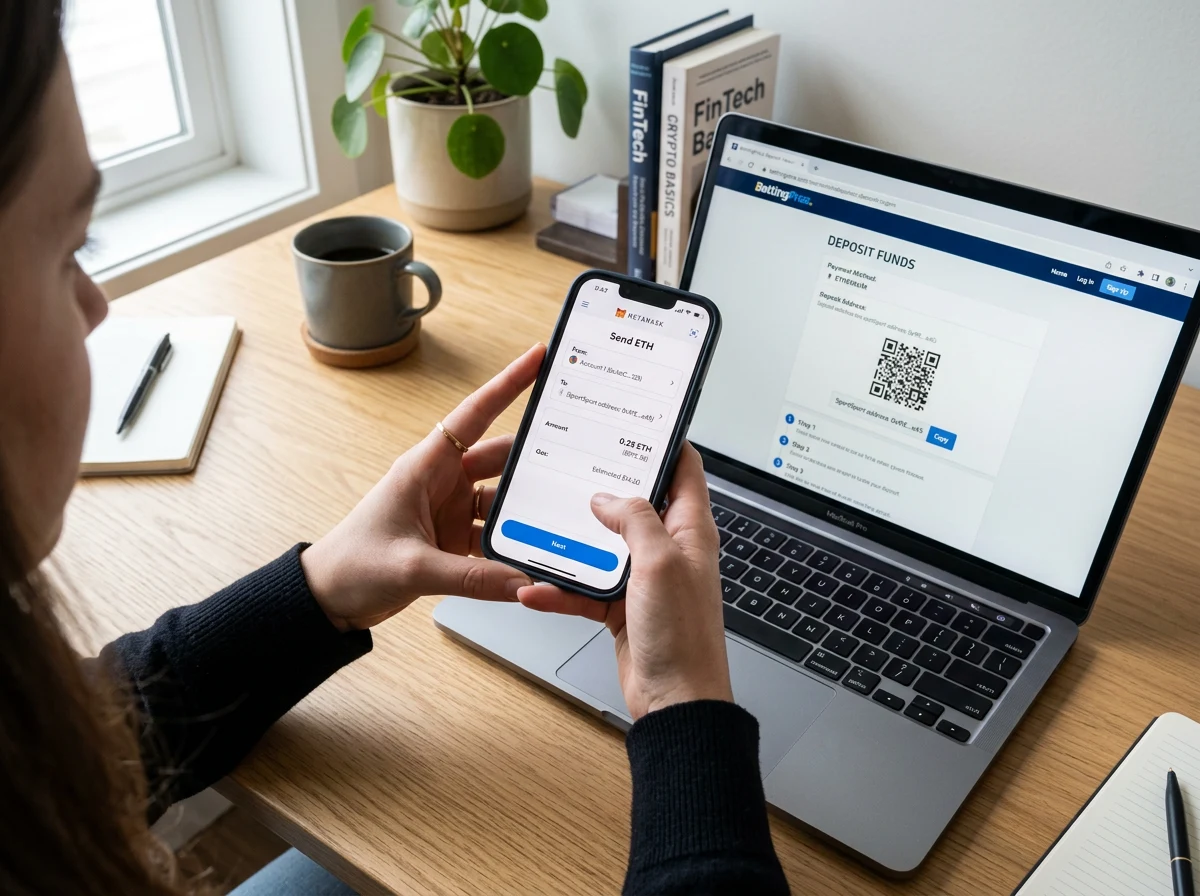
The Deposit Step Where Most ETH Bettors Make Mistakes
The first ETH deposit I ever made to a sportsbook cost me three hours of panic. I sent funds directly from a centralised exchange – Coinbase, in my case – and the transaction vanished into a pending state that neither the exchange nor the sportsbook could explain. The money arrived eventually, but the experience taught me a lesson I now pass on to everyone: sending ETH from an exchange to a betting site is the single most common and most avoidable mistake in this space.
Centralised exchanges like CoinSpot, Swyftx, or Kraken batch their withdrawal transactions and sometimes use internal transfer mechanisms that do not produce a standard on-chain transaction hash immediately. Sportsbooks, on the other hand, look for a direct on-chain deposit from a personal wallet. When those two systems do not align, your deposit gets stuck in limbo – credited by the exchange but not recognised by the platform.
The correct path is always the same: exchange to personal wallet, personal wallet to sportsbook. That middle step takes about two minutes and costs a basic ETH transfer fee of roughly $0.01 in January 2026 conditions. Skipping it to save that cent can cost you hours of support tickets and, in rare cases, permanently lost funds if the exchange uses a contract-based withdrawal that the sportsbook’s deposit system rejects.
With 127 million active Ethereum wallets in circulation as of early 2026, setting up a personal wallet is no longer a barrier. It is the baseline requirement for depositing safely.
Setting Up Your Wallet for a Sportsbook Deposit
If you do not already have a Web3 wallet, you are about five minutes away from one. MetaMask remains the default for desktop users – it is a browser extension that creates an Ethereum wallet and lets you interact with any site that supports WalletConnect or direct MetaMask integration. For mobile, Trust Wallet or the MetaMask mobile app both work. The setup is identical across all of them: install, create a new wallet, write down your 12-word recovery phrase on paper, and never store that phrase digitally.
That recovery phrase deserves emphasis. It is not a password you can reset through email. It is the only way to recover your wallet if your device dies, your browser crashes, or you switch phones. Lose it and your funds are gone permanently – blockchain transactions are irreversible, and no support team can recover a wallet without its seed phrase.
Once your wallet is live, fund it from your Australian exchange. On CoinSpot, that means navigating to your ETH balance, hitting “Send,” and pasting your MetaMask wallet address. Double-check the address character by character – or better yet, use the QR code scan function to eliminate copy-paste errors. The transfer from an Australian exchange to your MetaMask wallet typically takes one to three block confirmations, arriving within a minute or two under normal network conditions.
Before moving to the deposit step, make sure your wallet holds slightly more ETH than you plan to deposit. You need a small amount to cover the gas fee for the deposit transaction itself. For a deeper comparison of which wallet suits different betting styles, the trade-offs between hot and cold storage are worth understanding before you start moving larger amounts.
Depositing ETH via MetaMask and WalletConnect
I have tested deposits on roughly 30 sportsbooks over the past two years, and the flow has standardised considerably. Here is what the process looks like in practice.
Navigate to the sportsbook’s deposit page and select Ethereum as your payment method. The site will display a deposit address – a long string starting with 0x – and usually a QR code. Some platforms also offer a “Connect Wallet” button that triggers a WalletConnect or MetaMask popup directly.
If you are using the connect-wallet method, clicking the button opens MetaMask in your browser. You approve the connection, enter the deposit amount, and confirm the transaction. MetaMask shows you the estimated gas fee before you sign. In early 2026, a standard ETH transfer on mainnet costs around $0.16 to $0.22 in gas – trivial for deposits above $50, but noticeable if you are moving $10.
If you are using the manual address method, copy the sportsbook’s deposit address, open MetaMask, click “Send,” paste the address, enter the amount, and confirm. This method works identically but requires an extra verification step: always confirm the first four and last four characters of the address match what the sportsbook displayed. Clipboard malware exists specifically to swap crypto addresses during the paste step.
After confirming, your transaction enters the Ethereum mempool and is typically included in a block within 12 to 15 seconds. Most sportsbooks credit your account after one to three confirmations, meaning your deposit is usable within a minute. Compare that to bank transfers in Australia, which can take one to three business days through BPAY or same-day through PayID – ETH deposits are functionally instant.
One final detail: some sportsbooks assign a unique deposit address per user, while others use a shared hot wallet. If it is a shared wallet, you may need to include a memo or reference code. Missing that code means the sportsbook cannot attribute your deposit to your account, and recovering it requires a support ticket with your transaction hash as proof.
Choosing the Right Network: Mainnet vs L2 vs ERC-20
This is where deposits go wrong even for experienced users. When a sportsbook says it accepts ETH, it might mean mainnet Ethereum, an ERC-20 token on mainnet, or a Layer 2 network like Arbitrum or Optimism. Sending ETH on the wrong network does not result in a bounce-back – it results in funds arriving at an address the sportsbook does not monitor on that chain.
Mainnet ETH is the simplest: you send native ether on the Ethereum mainnet. If the sportsbook’s deposit page shows a network selector, choose “Ethereum Mainnet” or “ERC-20.” These are functionally the same network for native ETH transfers.
Layer 2 deposits require your wallet to be switched to the correct L2 network. If the sportsbook supports Arbitrum, you need ETH on Arbitrum in your wallet, and MetaMask must be set to the Arbitrum network before you send. The gas fee drops to under $0.01, but the initial bridging from mainnet to Arbitrum costs a mainnet gas fee – plan accordingly.
The worst-case scenario is sending mainnet ETH to an address that only accepts deposits on Polygon, or vice versa. The funds are not lost in a technical sense – they exist on the chain you sent them on – but the sportsbook cannot see them because it is looking at a different chain. Recovery depends entirely on whether the sportsbook holds the private keys for that address on both chains, and many do not.
My rule is simple: read the deposit page carefully, match the network in your wallet to the network the sportsbook specifies, and if you are unsure, send a small test amount first. Losing $2 to a test transaction is infinitely cheaper than losing $200 to a network mismatch.
ETH Deposit Questions
Can I deposit ETH directly from an Australian exchange to a sportsbook?
Technically possible, but not recommended. Exchanges like CoinSpot and Swyftx batch withdrawals and may use contract-based transfers that sportsbooks do not recognise. Always withdraw to a personal wallet like MetaMask first, then deposit from there. The extra step costs roughly $0.01 in gas and eliminates the risk of stuck or rejected deposits.
How long does an ETH deposit take to appear in my betting account?
Most sportsbooks credit ETH deposits after one to three block confirmations, which takes under a minute on mainnet. Layer 2 deposits are even faster, confirming in seconds. If your deposit has not appeared after 10 minutes, check the transaction hash on Etherscan to confirm it was sent to the correct address on the correct network.
What happens if I select the wrong network when depositing?
Sending ETH on the wrong network – for example, mainnet ETH to a Polygon-only deposit address – does not destroy your funds, but the sportsbook cannot see them. Recovery depends on whether the platform holds keys for that address on both chains. Many do not, making recovery difficult or impossible. Always verify the network before confirming.
The wider context sits in our Ethereum betting guide.
Check the minimum deposit before sending anything.